Search This Blog

Sunday, June 19, 2011

Using the Blogger Template Designer


Blogger Template Designer is a new way for you to easily customize the look of your blog. You can select a variety of templates, images, colors, and column layouts to make your blog an expression of you.
As you play around with the Template Designer, you’ll see a preview of how the blog will appear based on the choices you’ve made, which you can expand to by pressing the toggle to Expand Preview between the Blogger Template Designer dashboard and the preview. When you’re satisfied with the look of your blog, you can make them go live by pressing Apply to Blog in the top right hand corner of the Template Designer.
To get started with Blogger Template Designer, select a template for your blog from one of the professionally designed templates that are available. Each template appears as a large thumbnail that when clicked will show different variations on the template below that you can select by clicking on them. Note that clicking a new template will erase any customizations you’ve made on a previous template. Once you’ve chosen a template, you can continue customizing the look of your blog.

How do I add a poll to my blog?


Do you ever wonder about your visitors' opinions? Maybe you'd like to find out what your readers think about controversial subjects, or perhaps you just want a vote on whether your should change your blog's font to Verdana. Either way, it's simple to do by adding a poll to your blog.
You'll start by going to the Layout | Page Elements tab for your blog:

How can I create expandable post summaries?

Note: This article was written before we released our jump break feature and is outdated. We recommend using the new jump break feature instead of the following method as it is much simpler!
With this trick, you can choose to display an arbitrary amount of text from the beginning of each post, as a teaser for the whole thing. Then users who want to read the rest of the post can click a link to see the full text. This is handy if you have lots of long articles all on one page. Note that you'll need to have post pages enabled in order to make this feature work.
There are three ingredients that go into this feature: conditional CSS, a "read more" link for each post, and a modification for the posts that use this feature. So let's go through it step by step.

Posting audio clips to your blog

There are several services that allow you to create audio clips and post them to your blog. The first is called Gabcast. It offers everything Audioblogger does, plus a free 1-800 number (for those in the U.S.), international numbers, a Flash player for your posts, and more. There are both free and paid options for Gabcast. Another service, Hipcast, offers similar functionality, as a paid service. Please contact these sites for help and questions with these products.

Third-party Apps


The following is a list of cool third-party apps that integrate with Blogger in some way. Since these are third-party applications, standard disclaimers apply: your mileage may vary, you could experience data loss, we're not responsible if things go haywire, etc. If you come across any not on the list, please let us know.

Windows

Can I get site feeds for specific labels?


Yes, you can! If a blog you read is using labels and also has site feeds enabled, then you can pick and choose which topics you want to subscribe to. The format for label feeds is this:

http://blogname.blogspot.com/feeds/posts/default/-/labelname

Be sure to substitute in the correct blog address for blogname and the label you're interested in for labelname. Also, don't miss the hyphen ("-") in the URL. That's not a typo!
Note that a URL of this form will only work if the blog in question is using this specific label, and has also enabled site feeds. However, no special site feed settings are necessary. As long as the basic site feed for posts is enabled (with either short or full descriptions) then label feeds will also work.

How do I include archive links on the main page of my blog?


Note:This will only work if you are using a classic template. If you are using Layouts, simply add a page element, and select the archive option.
You can include your archive listing on the main page of your blog without resorting to messy javascript. For example, paste the following code into the appropriate area of your classic template:
<BloggerArchives>
  <a href='<$BlogArchiveURL$>'><$BlogArchiveName$></a>
</BloggerArchives>

All about Dynamic Views for Authors


Blogger now offers you the ability to present your content in several new and exciting ways.
flipcard

Comment Inbox


To make it easier for you to manage your comments, Blogger have created a new Comments tab for you to access them. Here, you can manage published comments, comments that have been flagged as spam and comments awaiting moderation if you have turned on Comment Moderation.
Users with Comment Moderation turned on will continue to see comments that need moderation and have not been flagged as spam inComments | Awaiting Moderation. Users without Comment Moderation will not see any comments in Comments | Awaiting Moderation.

Spam Inbox

Blogger now filters comments that are likely spam comments to a Spam Inbox, much like the spam folder in your email. When someone leaves a comment on your blog, it will be reviewed against our spam detector, and comments that are identified as possible spam will be sent to your blog’s Spam Inbox, found at Comments | Spam.
You can help improve our ability to automatically detect spam comments by checking your Spam Inbox and deleting spam comments and marking real comments that may have been flagged as spam as Not Spam.
Blogger are always seeking feedback on how to improve this feature, so please share your feedback with us by clicking on the Report Spam Filtering Issues.

How does Blogger Mobile work?


You send a message - which can be a photo, some text, or both - to go@blogger.com. In other words, we auto-provision a new blog and publish the post. It's that simple.

How do I post via email?


The Mail-to-Blogger feature turns any email account into a blog-posting application. In Settings | Email you can create a Mail-to-Blogger address which you will use to send posts via email to your blog:
Settings | Email tabTo post to your blog via email, you need to configure your Mail-to-Blogger email address in Settings | Email:
The format of the email address is username.secretword@blogger.com. Note that this email address must be kept secret. Otherwise, anyone who gets it will be able to post as you.
Also be sure to specify whether or not you prefer your email posts to publish automatically. If this option is not checked, then your posts will be saved on your account but will not appear on your blog until you log in to Blogger.com and publish them yourself.
Once you have saved your Settings, you can send email to your blog. The subjects of your email letters will be the titles of your posts, and the body of the emails will be the posts themselves. To include an image in your post, you can attach an image to you your email.
Notes:
  • Sometimes email programs append text to the bottom of each sent message; to make sure this cruft doesn't get posted to your blog, put #end at the end of your post.

How do I use the transliteration feature?


The Quick Answer

  • Go to the Settings|Basic tab and enable the transliteration option.
  • * Select your language.
  • Click the Transliteration button on the posting form to type in transliteration mode.

What is transliteration?

Blogger offers an automatic transliteration option for converting Roman characters to the characters used in the following languages:
  • Amharic

  • Arabic

  • Bengali
  • How do I find an old post?


    All your posts are available for editing on the Posting | Edit Posts tab, or by clicking the "Manage Posts" link on your dashboard.
    You can use the search box to filter the list for posts containing particular words. You'll also see a list of any labels you're using. Clicking on a label in this list will show you only posts with that label.

    Webmaster Tools and Blogger

    It is possible to enable Webmaster Tools directly from the Blogger dashboard. Once you do this, all your Blogger blogs will be automatically added to your Webmaster Tools account and verified. To verify a Blogger blog:
    • Sign in to Blogger using your Google Account.
    • At the bottom of the Blogger Dashboard, under Tools and Resources, click Webmaster Tools.
    • Here you will be shown a list of all the sites you own as well as given an opportunity to add any sites that are not listed.
    • Under the "Verified?" column, you can see which sites have not yet been verified by Webmaster Tools. Click "Verify" on any unverified sites you would like to verify.
    • Choose the "Add a meta tag" option, copy the meta tag code, and paste it in your blog's template in the first "head" section of the page, before the first "body" tag.
    • Once you've added the code to your blog's template, return to the Webmaster Tools dashboard and click "Verify".

    How do I import and export blogs on Blogger?


    The import and export features on Blogger give your content a whole new range of portability and freedom, allowing you to create copies of your own blogs as well as import them into other existing ones. Best of all-we've made this a very simple process!

    Import as a New Blog

    To import content as a brand new blog, click Create a Blog from your dashboard. 

    Change the text direction to right to left in the post editor


    If your Blogger interface language is set to Arabic, Hebrew or Persian you'll be able to select either Left to Right  or Right to Left  directionality when composing a post. A post can contain any combination of right-to-left and left-to-right paragraphs. By default, Blogger starts composing a post with the Right to Left button active in Hebrew, Arabic and Persian interfaces.

    To change the text direction:


    At the beginning of a post or new paragraph:
    1. Click the Left to Right button  in the formatting bar of the post editor. The cursor will move to the left side of the compose pane.

    Can I use keyboard shortcuts while posting?


    Blogger has several keyboard shortcuts you can use while editing posts. They definitely work in Internet Explorer 5.5+/Windows and the Mozilla family (1.6+ and Firefox 0.9+), and might work in other browsers. Here they are:
    • control + b = Bold
    • control + i = Italic
    • control + l = Blockquote (when in HTML-mode only)
    • control + z = Undo
    • control + y = Redo
    • control + shift + a = Link

    How to put AdSense and Google Affiliate Network in your blog's sidebar?


    If you're new to AdSense and not too familiar with making modifications to your blog's template, you can follow these instructions for placing AdSense code in your blog's sidebar (using the Minima template as an example).
    Assuming you have already signed up and been approved for a Google AdSense account, you should be able to log in here. Once you're signed in, click the AdSense Settings tab near the top of the page. To cut right to the chase, focus on these steps:
    1. Choose Your Ad Layout - To fit ads in your sidebar, it's best to choose one of the following ad layouts.
      Button (125x125)
      Skyscraper (120x600)
      Wide Skyscraper (160 x 600) 
      Vertical Banner (120 x 240)
      Small Rectangle (180x150)
      
    2. Choose a color palette - They are very cleverly named but it's really just a matter of your preference.
    3. Copy your AdSense code - At the bottom of the page, there's a box with code in it. Highlight all of that code and copy it.
    4. Paste the code somewhere - Notepad or Text Edit or something like that is a good place for now.
    5. Go to Blogger.com and sign in - Choose the blog you want to put ads on and click the template tab.
    6. This is less of a step and more of a precaution - Copy your entire Blogger template and save it in Notepad or Text Edit just in case.
    7. Find the place in your template that says this; you might have to scroll down pretty far:
      <!-- Begin #sidebar -->
      <div id="sidebar"><div id="sidebar2">
    8. Paste the AdSense code you saved earlier right after that part.
      <!-- Begin #sidebar -->
      <div id="sidebar"><div id="sidebar2">
      PUT YOUR ADSENSE CODE HERE!
    9. Save your template changes and republish your blog.

    How to put Google Affiliate Network links in your blog's sidebar

    If you're new to Google Affiliate Network and not too familiar with making modifications to your blog's template, you can follow these instructions for placing Google Affiliate Network links in your blog's sidebar (using the Minima template as an example).
    Once you sign up and are approved for a Google Affiliate Network account, you can sign in here to view your account. Once you're signed in, click the Links tab near the top of the page. Select which advertiser's links you want to work with, and then follow these steps:
    1. Choose your links - In the 'Links' section of your profile, select the advertiser whose links you want to use. Click Get Links in the Action drop down menu next to the advertiser's name. Click either the Text Links or the Image Links tab to view your options in each category. To fit ads in your sidebar, it's best to choose one of the following dimensions for an image link:
      Button (125x125) 
      Skyscraper (120x600) 
      Wide Skyscraper (160 x 600) 
      Vertical Banner (120 x 240) 
      Small Rectangle (180x150)
    2. Copy your Affiliate link HTML - Just beneath your desired link, click Get HTML. A box with code in it will appear. Highlight all of that code, then copy and paste it into Notepad, Text Edit, or a similar program.
    3. Sign in to Blogger - Choose the blog you want to put ads on and click the Template tab.
    4. Caution - Copy your entire Blogger template and save it in Notepad or Text Edit just in case.
    5. Find the place in your template that says:
      <!-- Begin #sidebar -->
      <div id="sidebar"><div id="sidebar2">
    6. Paste the Affiliate link HTML you saved earlier right beneath that place in the template:
      <!-- Begin #sidebar -->
      <div id="sidebar"><div id="sidebar2">
      PUT YOUR AFFILIATE LINK HTML HERE!
    7. Save your template changes and republish your blog.

    How do I show ads between my posts?


    If you want to show ads between your posts but chose not to do it while initially signing up for AdSense, first go to your Template | Page Elements tab. Then, in the "Blog Posts" section, click on "Edit". A pop-up window will appear with options to configure your blog posts. Check the box next to "Show Ads Between Posts". (Note: You must be signed up for AdSense before you can check this box.)
    Show Ads Between PostsOnce you check this box you'll see the configuration options for your ads. You can then select how often you would like ads to be shown after your posts.
    Show after every x postsFor example, if you want ads to be displayed after every post, select "1" from the drop-down menu. (Please note that AdSense policies limits you to a total of 3 ad units per page and Blogger will automatically prevent you from going over this limit.) You can then select your ad format and colors. Once you have finished configuring your ads, click on the orange "Save Changes" button in the bottom right corner.

    Saturday, June 11, 2011

    Follow other blogs!


    Are you tired of dealing with HTML and CSS every time you want to change the look of your blog? Well, it turns out that there's an easier way. With the Layouts feature, you can drag-and-drop to move parts of your page around, and choose new fonts and colors with easy mouse clicks. Newly created blogs will work this way automatically, but for blogs without this feature, you'll need to upgrade your template. Here's how.
    1. Find the name of your blog on your dashboard, and click the Template link next to it. If this link says Layout instead, then it's already upgraded and you can skip the rest of these steps.

    How can I use the Blogger Layouts features?

    This post is based on a query posted by John Wilson from U.S. Thanks!

    Are you tired of dealing with HTML and CSS every time you want to change the look of your blog? Well, it turns out that there's an easier way. With the Layouts feature, you can drag-and-drop to move parts of your page around, and choose new fonts and colors with easy mouse clicks. Newly created blogs will work this way automatically, but for blogs without this feature, you'll need to upgrade your template. Here's how.
    1. Find the name of your blog on your dashboard, and click the Template link next to it. If this link says Layout instead, then it's already upgraded and you can skip the rest of these steps.

    Polls Page Element

    The Polls page element is one of the new features we’ve added to Blogger in draft today. With this new page element, you can add a poll to your blog’s sidebar that your readers can vote in. Add as many answer choices as you like, and even select a date that you’d like the poll to close on.

    Here’s a quick video of putting the polls widget into action:


    Search Box

     The Search Box page element:

    It uses Google's Custom Search Engine to dynamically search over your blog's content, as well as anything you've linked to in your blog posts, and even your sidebar-based link lists and blogrolls. In other words, it's really nifty - you can find it in your blog's Template | Page Elements tab, in the "Add a Page Element" popup.

    Feature: OpenID commenting

    Blogger in Draft now lets you enable OpenID-based commenting, in your blogs' Settings | Comments tab:


    (OpenID comments work in both the Anyone and Registered Users modes)

    Use Your Own Photo for Your Blog’s Background

    After we launched the Blogger Template Designer, one of the most requested features was the ability to upload your own background image. Though we provide hundreds of professional stock photos from iStockPhoto, we know many of you are serious photo buffs and would like to use your own beautiful photo as your blog’s background image.

    And now you can! Go to Design | Template Designer | Background, click onBackground Image, and you’ll notice a new “Upload image” option, which will allow you to select and upload your image.

    Search and Insert YouTube Videos

    Blogger supports drop-dead easy video-blogging -- if you have a video file, you can just upload it to Blogger. But when it comes to video-blogging, we know a lot of you also choose to embed YouTube videos to your post.

    Currently, adding a YouTube video to your post is fairly easy, but it still requires several steps of work: If you don't have the embed code already, you'd have to open a new browser window or tab, go to YouTube.com, search the video, and play the video to make sure it's the right video. Once you copy the embed code, you come back to your Blogger post and manually insert the code in your post.

    We’ve just added a new Blogger in Draft feature that makes this process a lot easier. You don't have to open another tab or window; from your post editor, just click theInsert a Video button in the toolbar. In addition to the already existing Upload tab, you'll now see two new tabs: From YouTube and My YouTube videos.


    Customize Your Favicon! - By Blogger


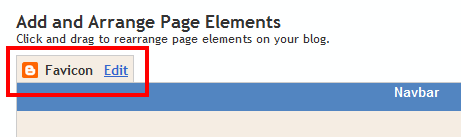
    For many bloggers, having a custom favicon (the tiny image displayed in your browser’s window or tab) is the finishing touch that ties together the design and identity of a great looking blog. Today, we're pleased to announce that Blogger in Draft users can now add a customized favicon to their blog.

    You can add a custom favicon from the Design | Page Elements tab (or, from theLayout tab if you're using the new user interface), by clicking Edit on the new “Favicon” setting above the navbar element:


    Blogger Mobile Templates

    This post is a press release from Google:
    A few months ago we introduced mobile templates to Blogger in Draft. Today, we’re excited to announce that not only will these templates be available to everyone, we’ll be supporting all 27 Template Designer templates. We invite you to make your blog smartphone-friendly by going to the Dashboard > Settings > Email & Mobile tab and enabling the mobile template option.


    Blogger mobile templates are mobile-optimized versions of our Template Designer templates. If you are using one of these templates, when you enable the mobile template option your blog will begin rendering using the mobile version of the same variant. Even if you are not using a Template Designer template, or using a heavily-customized version of one, you can still enable this feature to have your blog start rendering in a generic default mobile template that we have created.

    Monday, June 6, 2011

    Blogger Android App!

    Have you ever wanted to write up a quick blog post on the go? Now there is an easy way to do this on your Android phone! We are excited to announce our first version of the Blogger Android App. Using the app you can easily compose a post, attach a photo that you just took with your phone, and either save it as a local draft for later or immediately publish it to your blog. If you are an Android user, you can start using the Blogger app today by downloading it for free from theAndroid Market.


    Feature highlights
    • Multiple accounts and blogs: You can easily switch between different accounts and blogs that you have author rights to. Simply choose your account and blog and you are all set to go.

    Fonterizza!

    A couple of months back Google introduced Web Fonts to Blogger in Draft. Today we’re excited to not only launch Web Fonts to ALL Blogger users, but also announce we’ve added an additional 35 fonts to the mix, for a grand total of 77 fonts!

    Henry Ford once said “Any customer can have a car painted any colour that he wants so long as it’s black.” When it comes to the Internet and fonts, sometimes this hits pretty close to home: “You can use any font you want so long as it’s Arial.” With the introduction of Web Fonts, this is now a far cry from the truth!

    Web Fonts, brought to you by our good friends at Google Fonts, let you spice up and further personalize your blog. Just have a look at what we’ve done with the post titles of this blog! And for those of you interested in fonts for non-latin alphabets such as Cyrillic, Greek and Khmer, we have those too!

    Rich Editing in BlogThis!

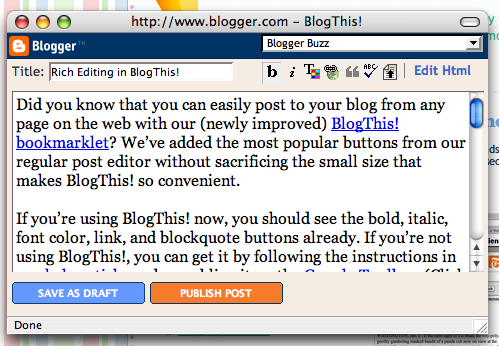
    Did you know that you can easily post to your blog from any page on the web with our (newly improved) BlogThis! bookmarklet? We’ve just added the most popular buttons from our regular post editor without sacrificing the small size that makes BlogThis! so convenient.


    If you’re using BlogThis! now, you should see the bold, italic, font color, link, and blockquote buttons already. If you’re not using BlogThis!, you can get it by following the instructions in ourhelp article, or by enabling it on the Google Toolbar. (Click “Options,” go to the “More” tab, then click on the “BlogThis!” checkbox.)

    Blogger Widget for Mac Dashboard


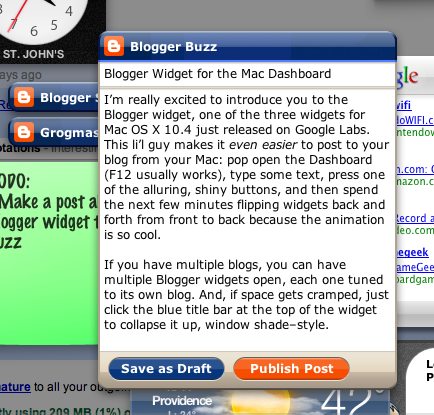
    I’m really excited to introduce you to the Blogger widget, one of the three widgets for Mac OS X 10.4 now available on Google Labs. This li’l guy makes iteven easier to post to your blog from your Mac: pop open the Dashboard (F12 usually works), type some text, press one of the alluring, shiny buttons, and then spend the next few minutes flipping widgets back and forth from front to back because the animation is so cool.

    If you have multiple blogs, you can have multiple Blogger widgets open, each one tuned to its own blog. And, if space gets cramped, just click the blue title bar at the top of the widget to collapse it up, window shade–style.


    Word Verification For All

    One of our most effective tools for preventing spam and automated abuse of Blogger is our word verification image. We require it to be solved to create a blog or post to blogs our automated spam classifier catches, and offer it as an option for you to include on the comment form on your blog.

    Word verification (sometimes called a CAPTCHA™) is designed to be a simple puzzle that a human can solve easily but a computer cannot. Sadly, that has not been the case for Blogger. A ton of humans cannot solve our word verification simply because they cannot see it.

    Today we’re very happy to add an audio verification alongside every word verification in Blogger. Now almost everyone will be able to create blogs, post comments, and prove to our spam classifier that they’re not a robot.

    Share from Nav Bar

    It's fitting that our newest birthday present was announced first on Twitter. Starting yesterday, theBlogger Navbar includes a new button: "Share."


    When your readers are on your blog's home page, they can click "Share" to post the blog's URL to Twitter, Facebook, or Google Reader. If they navigate directly to an individual blog post, clicking "Share" in the navbar also lets them share the post by email.

    One-click Blogging with BlogThis! Chrome Extension!

    More and more of you are using Google Chrome (more than 30 million active users now!), and we want to let you know that a Blogger extension is included in the Chrome Extensions gallery. TheBlogThis! Chrome extension is available now, one of several hundred extensions to be found in theChrome extensions gallery.

    Using the BlogThis! Chrome extension, you can start writing a blog post in one click. Whenever you are inspired by a web page you are looking at and want to blog about it, just click on the BlogThis! button on your Chrome toolbar, and the Blogger post editor opens up with a pre-populated link to the web page you were on. If you want to include any text in your post, simply highlight it before clicking on the BlogThis! button. Edit the post as you'd like, and publish it instantly or save it as a draft for future posting.


    Blogger Custom Domains


    Settings - PublishingThe new version of Blogger now supports using acustom domain for serving your blog. If you already own a domain named, say, mysite.com and want your blog to be served at that address instead of at ablogspot.com address, we can host your blog on that domain for you — for free. Your old Blog*Spot address will forward to your new custom domain, so the switch will be seamless for your readers.

    Blogger and Picasa Web Albums


    Ever wanted to see all the photos you've uploaded to your blog in one place? Head over to Picasa Web Albums and now you can! We've been working closely with the Picasa team on this project - all the photos you've uploaded since December will appear in an album there, and we're working on migrating your older photos as well. (It'll take a while though - there are a lot of them.) Each of your blogs now has its own album in Picasa Web Albums, which is exciting because you now have a photo management interface for your blog's photos - for example you could order prints, use the fancy email this photofeature, or easily embed the album somewhere else on the web. Be careful when you delete photos though, because deletions will affect both your blog and its album. Lastly, Blogger photos are now part of Picasa Web Albums' 1GB of free quota, which can beupgraded.Check out Picasa and Picasa Web Albums!

    Template Widgets: Newsreel and Video Bar


    Thanks to our friends from the Ajax Search API team, we now have two more fun and useful widgets you can add to your new Blogger blog: Newsreel and Video Bar:

    The Newsreel searches Google News for your chosen keywords and displays an ever-updating list of their search results. The Video Bar does the same for Google Video and YouTube searches, and even lets you play the videos without leaving your blog! Check out Pete's mobile blog for particularly erudite examples of the Newsreel and Video Bar in action.

    Learn how to add an image to your blog's header


    Our friend Ryanne has been asking us for an easy way to add an image to her blog’s header for a few months now. When we added the feature a few weeks back, she was excited enough to create a screencast to teach everyone how to do it:

    Subscribe to Comments - by email!


    Subscribing to comments via email makes it a lot easier to stay in the conversational loop after you’ve commented on a post somewhere. For example, you could follow along with these discussions from some recent Blogs of Note:
    You'll notice the new checkbox at the bottom of the Comment page, in the identity box:

    Blogging from YouTube


    As you videobloggers already know, you can upload your videos directly to Blogger. But for the rest of the video watchers out there, did you know you can just as easily post YouTube videos to your blog?

    All you need to do is set up your YouTube account to post videos to your blog using the "Share" button. You'll enter your Blogger information once, and from then on it's one-click sharing from any YouTube video page!

    Thursday, June 2, 2011

    Twitter Introduces One-Click 'Follow' Button


    There's a new way to get your customers to follow you: Add a Twitter "Follow" button to your Website. On Tuesday Twitter announced a new Follow button, similar to the "Tweet" button, for third-parties to add to their Websites. The new Follow button lets Twitter users instantly follow a Twitter account without having to leave the site they're on. This is particularly convenient, because users no longer have to search Twitter to find the account they're looking to follow (which can be a hassle). The button is similar to Twitter's Tweet button, which lets users tweet specific content with their own followers. So its a good thing for your blog.


    Here's a press release from Twitter:-
    When you follow interesting accounts on Twitter, it’s easy to stay connected with what’s most meaningful to you. Today we’re excited to launch the Follow Button, a new way to discover and instantly follow Twitter accounts directly from the websites you visit everyday.

    Switch to the new post editor


    An overview of the new post editor


    How to enable the new editor


    To enable the new editor, first navigate to your blog's Settings | Basic tab. Near the bottom of the page you will see a field called Select Post Editor and from there you simply need to select Updated Editor and save your settings. That's it! Now on to the new features...

    Get a share sidebar!

    Got a website? Then the ShareSidebar is a must-have (see it on the right-side) The sidebar will increase sharing by 20-30% because of its unique and permanent position. Add the sidebar to your website now. It's easy and it's free.


    To get it: - 

    • Go Sharesidebar.com
    • Select where you want to place the sidebar(Left or Right).
    • Add the services you want which include Facebook, Twitter, Delicious, Digg, Google Buzz, StumbleUpon, Reddit, Yahoo Buzz and others.
    • Type your Email.
    • Enter your blog's URL.
    • Click 'Get Code'